
For over 20 years, the Decent Homes Standard (DHS) has been the benchmark for quality in social housing.
Now, through the Renters’ Rights Act, the government is beginning a phased extension of this standard to the private rented sector.
This changes how you need to think about compliance in your tenancies. Here is a breakdown of what you need to know about the proposed changes, the new criteria, and the timelines for compliance.
- Why the change?
- When does the implementation of the new Decent Homes Standard start?
- The 5 criteria of a “decent home”
- Fines and penalties
Save time and money by reaching the right tenants without the hassle of hidden costs. Get Started
Why the change?
In the policy statement, government data shows that 21% of privately rented homes were classified as “non-decent,” compared to just 10% in social housing.
The government’s goal is to create a “universally accepted and understood minimum standard” so that every tenant, regardless of their landlord, lives in a safe, warm, and well-maintained home.
When does the implementation of the new Decent Homes Standard start?
The implementation is split into distinct phases to allow the sector time to adapt. While the first wave of rental reforms is now live, the full Decent Homes Standard has a longer lead-in time:
- 1st May 2026 (live now): The “Commencement Date” for the Renters’ Rights Act. This phase has already abolished Section 21 evictions and moved all tenancies to a periodic (rolling) system.
- Summer 2026: Local authorities are expected to receive new powers to issue immediate civil penalties of up to £7,000 specifically for “Category 1” hazards (serious health and safety risks like dangerous wiring or severe damp).
- Late 2026-2028: The Private Rented Sector Database and the Landlord Ombudsman will become operational. All landlords must register their properties to remain compliant with possession rules.
- 1st October 2030: All privately rented properties must meet the new Minimum Energy Efficiency Standards (MEES), achieving an EPC rating of C or higher.
- 2035: The modernised Decent Homes Standard becomes a fully enforceable requirement for the entire private rented sector.
Awaab’s Law update
Awaab’s Law, which sets strict legal timeframes for landlords to investigate and repair hazards like damp and mould, has been extended to the private sector via the Renters’ Rights Act.
You are now legally required to investigate reported hazards within 14 days and begin repair work within a further 7 days if the hazard poses a significant risk to health.
You might also be interested in…
- Awaab’s Law Explained: A Guide for Private Landlords
- All You Need to Know About the ‘Register Your Rental Property’ Service and Landlord Ombudsman
- Making Tax Digital (MTD) for Landlords: How Does It Work?
- Free Assured Periodic Tenancy Agreement (APT Rental Contract)
- Joint Tenancy Guide: Understanding Joint and Several Liability
The 5 criteria of a “decent home”
To pass the new DHS, a property must meet five specific criteria. While some are already covered by existing law (like the HHSRS), others introduce brand-new requirements for private landlords.
1. Free from Category 1 hazards (Criterion A)
The property must be free from Category 1 hazards under the Housing Health and Safety Rating System (HHSRS). This covers 29 hazards, including dangerous electrics, structural instability, and fire risks.
If your property is “Fit for Human Habitation” under the 2018 Act, you already meet this criterion.
2. Reasonable state of repair (Criterion B)
This is a significant shift. Previously, a component had to be both “old” and “broken” to fail. The new proposal removes the age requirement.
If a “key” component (like a roof, boiler, or wall) is in disrepair, it fails the standard immediately, regardless of how old it is. Kitchens and bathrooms are now considered “key”. If they require major repair, the property fails.
3. Modern facilities and services (Criterion C)
This ensures the home is functional for modern living. The requirements differ slightly depending on your property type:
- For houses: Must provide at least 2 out of 3 facilities (Adequate kitchen layout, appropriately located bathroom/WC, and noise insulation).
- For flats: Must provide at least 3 out of 4 (The three above, plus adequate common entrance areas).
The government is also proposing mandatory child-resistant window restrictors on windows that present a fall risk, and they are seeking views on whether landlords should be required to provide suitable floor coverings at the start of every tenancy.
4. Thermal comfort and energy efficiency (Criterion D)
This criterion is directly linked to Minimum Energy Efficiency Standards (MEES).
- EPC C by 2030: All privately rented properties must reach an EPC rating of C or equivalent by 1st October 2030.
- Whole-home heating: Your primary heating system must be able to heat the entire home, not just a few rooms.
- Tenant control: Heating must be “programmable”, meaning tenants must have access to a thermostat or programmer to control timing and temperature.
These requirements are now part of your ongoing compliance duties as a private landlord.
5. Damp and mould (Criterion E – New)
In response to the tragic death of Awaab Ishak, a new standalone criterion requires homes to be free from damp and mould. This is intended to be preventative; you are expected to act as soon as damp is reported, rather than waiting for it to become a severe health hazard.
We’ve teamed up with the best energy assessors to bring you great service for a low price.
Book Your EPC Now
Fines and penalties
Local authorities are the main enforcers under the 2026 framework, and penalties have been strengthened as part of this system.
If you fail to meet the Decent Homes Standard or address hazards, councils can issue immediate civil penalties of up to £7,000.
For less urgent disrepair, they can serve improvement notices with strict deadlines for you to complete the required works. Where enforcement notices are ignored or in cases of repeat breaches, fines can rise to a maximum of £40,000.
Tenants can also apply for Rent Repayment Orders if you fail to comply with a Decent Homes Standard improvement notice.
Final thoughts
The Decent Homes Standard is the final piece in professionalising the sector. While the 2035 deadline for the full standard seems distant, Awaab’s Law and the HHSRS enforcement are active today.
Proactive maintenance is now your best financial strategy. By tackling damp and updating heating systems now, you avoid the steepest fines and the risk of Rent Repayment Orders that local authorities are now actively pursuing.


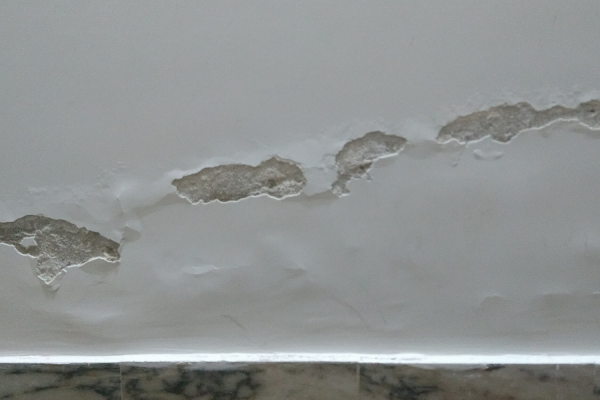

By and large I wholeheartedly agree with the proposed changes and as a landlord I try hard to even outperform the proposed standards. I have one ‘tricky’ property though and would appreciate others’ views. I own a flat in a converted Georgian house. Its one of five freehold flats and has a communal maintenance agreement. It is the only flat in the block which is tenanted. Recently the flat has shown signs of water ingress which has been diagnosed to be a result of porous Georgian/Victorian brickwork. As the landlord of just one flat in the building, surely I cannot be held responsible for fixing the structural issues of the whole block?. The other flats are all owner occupied and not all will be willing to undertake/pay for the necessary works to the block - equally the root cause of the problem as porous brickwork is not something that I can unilaterally deal with for my tenants. Where will I legally stand once this legislation is passed?. If I cannot provide or meet the New Decent Homes standard will this be an acceptable ground for either the landlord or the tenant to end the tenancy?. I probably will not be the only landlord with a tenanted flat in a block of otherwise owner occupied flats in the country.
Is there a management company over the block?
They will all have to share the cost. Not self management is it?
I’m not convinced by this diagnosis. If the water ingress is through the bricks, why hasn’t the problem manifested before now on a property that’s around 200 years old? What has changed to make the issue appear now?
There are other things that you can do to stop water coming through the walls, such as having a waterproof membrane fitted on the inside of all the exterior walls. This would be very expensive, but I assume would not require the consent of the freeholder/all the other leaseholders.
You would not be allowed to simply allow damp/mould to go untreated in a tenanted property, so if it makes the flat uninhabitable and you can’t afford to fix it, you would need to evict the tenant and stop letting it.
You can spray brickwork with a clear waterproofing liquid . I have used to great effect on my garage, then when I hosepiped it, the water just ran off it