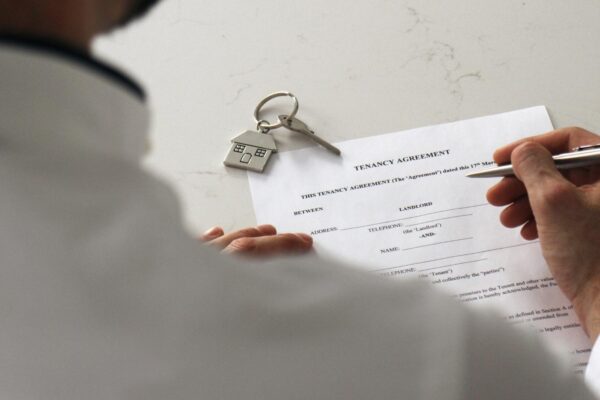
Rules around rent in advance are set to change under the Renters’ Rights Act. It will prevent rent from being taken before both landlord and tenant have signed the tenancy agreement. It will also ban clauses that require tenants to pay rent in advance before the tenancy officially begins, or to pay more than one month’s rent up front.
This change could have a real impact on landlords who are used to taking several months of rent in advance, for example, when letting to students or tenants without a rental history. However, it also affects all landlords and the way initial payments are managed.
- The new rules on pre-tenancy rent payments
- Changes to the first month’s rent or initial rent
- Managing lump-sum rent payments
- FAQ: Rent in advance and the Renters’ Rights Act
With new rental laws on the horizon, it pays to be prepared. Rent Now keeps your tenancy agreements legally sound and up to date. Discover Rent Now
The new rules on pre-tenancy rent payments
The Renters’ Rights Act introduces new rules about when landlords can legally collect rent. Here’s what these changes mean for pre-tenancy payments and how to stay compliant.
Will I still be able to take rent before a tenancy agreement is signed?
No. The Renters’ Rights Act prevents landlords from collecting rent before both landlord and tenant have signed the tenancy agreement and it’s legally in force.
At the moment, rent is treated as a “permitted payment” under the Tenant Fees Act 2019. Once the implementation of the Act begins on 1st May 2026, any rent taken too early will be classed as a prohibited payment, and landlords who breach the rule could be fined by their local authority.
What exactly is banned?
The restriction applies to any rent requested or accepted before the tenancy formally begins. In practice, this means you cannot ask for, or take, rent in advance until the agreement is signed and active.
Holding deposits and tenancy deposits are not included in this ban. A holding deposit can still be used towards the first rent payment, but only once the tenancy has officially started and within the allowed period.
Can tenants choose to pay up front anyway?
No, the rules are very strict. Section 5 of the Tenant Fees Act 2019 will be amended to include anti-avoidance measures, which are similar to those used to ban rental bidding. Landlords and letting agents must not:
- accept a prohibited pre-tenancy rent payment from a tenant, guarantor, or any other “relevant person”
- invite or encourage a relevant person to make such a payment
- use a third party to get around the rules, including accepting rent from a third party or encouraging a third party to pay
Even if a tenant offers to pay several months’ rent upfront, you are not permitted to accept it. Under the Tenant Fees Act, a “relevant person” includes the tenant and anyone acting on their behalf, such as a guarantor.
Failure to follow these rules can result in a financial penalty if a local authority determines beyond reasonable doubt that the landlord has breached them.
You might also be interested in…
- Renting a Property to Family and Friends: What Are the Rules?
- Pets in Rental Properties: What Every Landlord Should Know
- Understanding Leasehold Reforms in 2026
- What the New Decent Homes Standard Means for the Private Rented Sector
- How to Increase the Rent by Serving a Section 13 Notice
Changes to the first month’s rent or initial rent
The rules around the first month’s rent, or the “initial rent,” are changing under the Renters’ Rights Act. For landlords, this means adjusting how and when you request that first payment.
The aim is to make rent collection fairer for tenants while still giving landlords flexibility to manage payments, especially when the tenancy start date doesn’t align neatly with the calendar month.
What does initial rent mean?
The term “initial rent” refers to the rent payable for the first rental period, or for any period that ends within the first 28 days of the tenancy.
The rule allows some flexibility for landlords. For example, the first rent period can be shortened to match a tenant’s payday, or to align all rent payments to a consistent date for landlords managing multiple properties.
Currently, it’s common for landlords to extend the first month’s rent by a few extra days so tenants pay more upfront. Under the new rules, this will no longer be allowed. Landlords can only have a shorter first rent period, after which rent must be charged on a standard calendar month basis.
When can the initial rent be collected?
Landlords will not be able take the “initial rent” before the tenancy agreement is signed. However, they can request and receive it during the “permitted pre-tenancy period.”
This period begins once the tenancy agreement is signed and ends the day before the tenancy officially starts. During this time, landlords can collect the initial rent from the tenant.
Can rent be charged for more than one month at a time?
No, under the Renters’ Rights Act, rent cannot be charged for more than one calendar month at a time. Any clauses in new tenancy agreements that set longer rent periods, such as quarterly or termly payments, will be invalid once implementation of the first phase of the Act begins on 1st May 2026.
This applies only to new tenancies starting after the commencement date; existing agreements will not be affected.
However, the first rent period can be shorter than a full month if needed. For example, if a tenant moves in partway through a month, the initial period can run from the move-in date to the end of that month, with regular monthly payments starting thereafter.
How should landlords handle the first rent payment?
Landlords will need to be careful with when they request the initial rent. Asking for it before the tenancy agreement has been signed would count as a prohibited pre-tenancy payment.
The proper sequence for collecting the first rent might look like this:
- Tenant pays a holding deposit, which should be no more than one week’s rent.
- Tenant referencing is completed, and the landlord confirms they will let the property.
- Tenant signs the tenancy agreement and pays the tenancy deposit.
- Landlord signs the tenancy agreement.
- The agreement is now in place, so the landlord can request the initial rent (usually, minus the holding deposit already paid).
- Tenant pays the initial rent within the permitted pre-tenancy period.
- Tenant moves in on the agreed start date of the tenancy.
One challenge to note is that if the tenant doesn’t pay the first month’s rent before moving in, the landlord may still be legally required to allow them to take possession, potentially leaving rent unpaid from day one. More clarification is expected to come as we get closer to the implementation of the Renters’ Rights Act.
Don’t waste time! Get your property live on OpenRent in just a few clicks and reach millions of tenants. Create A Listing Now
Managing lump-sum rent payments
Here’s what you need to know about taking big upfront rent payments and staying on the right side of the law.
Are landlords allowed to take large lump-sum rent payments?
No. Under the Renters’ Rights Act, landlords won’t be able to include terms in tenancy agreements that require tenants to pay rent in advance beyond the initial rent (which can only be collected during the permitted pre-tenancy period).
This means landlords will no longer be allowed to request large lump-sum payments, such as six months’ rent upfront, which have often been used when renting to students or tenants without a UK rental history.
Keep in mind, these restrictions will apply only to new tenancies created after the Act’s commencement date. Any clauses in existing tenancy agreements that require rent to be paid quarterly or every six months will continue to be valid.
How does this differ from pre-tenancy rent payments?
From 1st May 2026, any pre-tenancy rent payments (taken before the tenancy agreement is signed) will be prohibited. However, requesting a lump sum after the agreement has been signed doesn’t automatically breach the Tenant Fees Act.
That said, tenants are under no obligation to agree to such payments, and landlords cannot make signing the tenancy conditional on paying rent in advance. Any clause attempting to require this would be unenforceable, meaning tenants could only choose to do so voluntarily.
Any rent paid in advance must clearly cover specific rent periods. If it doesn’t, it could be treated as a tenancy deposit, which under the Tenant Fees Act is capped at five weeks’ rent. Exceeding this would be a breach of the law.
FAQ: Rent in advance and the Renters’ Rights Act
The rules around rent in advance are changing, and many landlords are unsure how it affects them. Here we answer the questions landlords ask most often.
No. The Renters’ Rights Act makes any terms in a tenancy agreement that require rent to be paid before the start of a rent period legally unenforceable. These terms will have no effect, but they do not breach the Tenant Fees Act.
Rent is treated as due in advance if it is requested before the start of the period it covers. For example, if a rent period runs from the 26th of one month to the 25th of the next, the rent cannot be demanded before the 26th.
Yes. If a tenant chooses to pay rent ahead of schedule – for instance, paying rent due on Christmas Day a few days early – the landlord can accept it. Since this occurs after the tenancy agreement has been signed, it doesn’t violate the Tenant Fees Act.
Yes. Once both parties have signed the tenancy agreement, tenants can pay rent in advance, such as paying a full term’s rent upfront. Landlords may request such payments, but they cannot include a clause forcing tenants to pay early; the tenant must agree voluntarily.
Any rent paid before the tenancy agreement is signed counts as a prohibited pre-tenancy payment under the Tenant Fees Act. Landlords must return these payments immediately to avoid breaching the law.