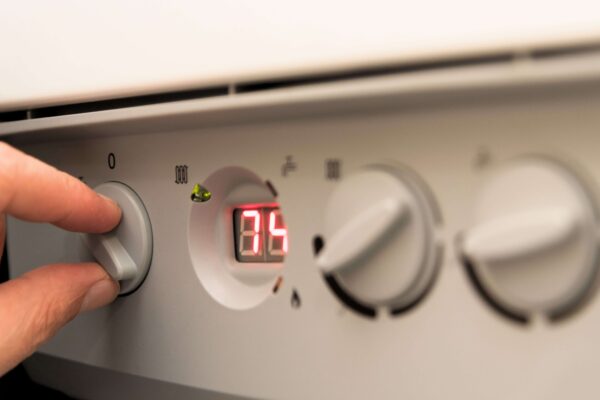
A faulty boiler is one of the most common issues tenants report in privately rented properties. No hot water, no central heating, and plenty of complaints to handle.
For landlords, the cost in both time and money quickly mounts up. That’s why it pays to stay one step ahead with expert advice from a qualified Gas Safe engineer.
Luke is a Gas Safe registered engineer with over 10 years’ experience. He has worked across residential and commercial projects, including a wide range of new builds. Here are his top four tips for dealing with some of the most common boiler problems.
Annual gas safety checks are a legal requirement. Schedule a Gas Safe engineer to visit your property when it works best for you. Book Now
1. Topping up the boiler isn’t a proper fix
One of the most common boiler headaches we see is a drop or complete loss of pressure.
Naturally, tenants and landlords often think topping up the boiler via the filling loop will sort it. But here’s the thing: in around 90% of cases, the pressure drop is caused by a leak. Topping it up isn’t going to fix that leak.
If the leak is tucked away under your flooring and not yet visible, the long-term damage could be serious. Simply topping up won’t make it go away.
Worse still, topping up dilutes the central heating inhibitor, reducing the system’s protection. Some manufacturers will even void warranties if inhibitor levels are too low, so keeping on top of this is very much in your best interests.
2. Limescale is a boiler killer
Hard water isn’t just tough on your skin; it’s tough on your boiler, too.
In some parts of the UK, the water contains extra minerals that, over time, leave behind a build-up of limescale.
Limescale can clog your pipes and even damage expensive parts like the heat exchanger. If you’re in a hard water area, it’s something you really need to watch out for.
3. Sludge is also a major headache
Central heating inhibitor does a good job of breaking down sludge and other gunk in your system. But where does it all go?
If you’ve got a microbore system with 8mm or 10mm pipes, sludge can get stuck in the pipework and valves. Sometimes, even a power flush won’t clear it.
4. Power flushing is rarely the best option
Power flushing an old heating system is usually more trouble than it’s worth.
Over time, soldered joints such as elbows, tees and couplers can weaken. Pumping strong chemicals through under high pressure can easily cause leaks.
Sometimes a flush won’t fix the problem at all. Microbore pipes (8mm or 10mm) can trap sludge that a power flush won’t clear. Poorly routed pipework is another common issue, which may require re-routing pipes to all the radiators.